
Cherokee County Criminal History Checks
No single search contains every Cherokee County criminal record. The Cherokee clerk's case system gives the court posture, the sheriff's inmate tool shows current or recent county custody, and the report remains with the sheriff or city police agency that wrote it. GCIC supplies the statewide repository layer. Before searching, collect a full legal name, date of birth, spelling variants, event date, and any case or incident number.
Use a layered check so that one portal's limits do not become a false conclusion.
- Search the Cherokee County court index by surname and first name, or by case number when known.
- Check the sheriff custody tool if the event is recent or the person may still be jailed.
- Ask the originating law-enforcement agency for its incident or arrest report.
- Read the filed accusation, indictment, docket, and disposition at the clerk rather than relying on booking language.
- Use GCIC self-review or an authorized fingerprint route when an official identity-linked Georgia history is required.
The official court-search capture shows why local case data is a useful first layer. View the source for the Cherokee court image.
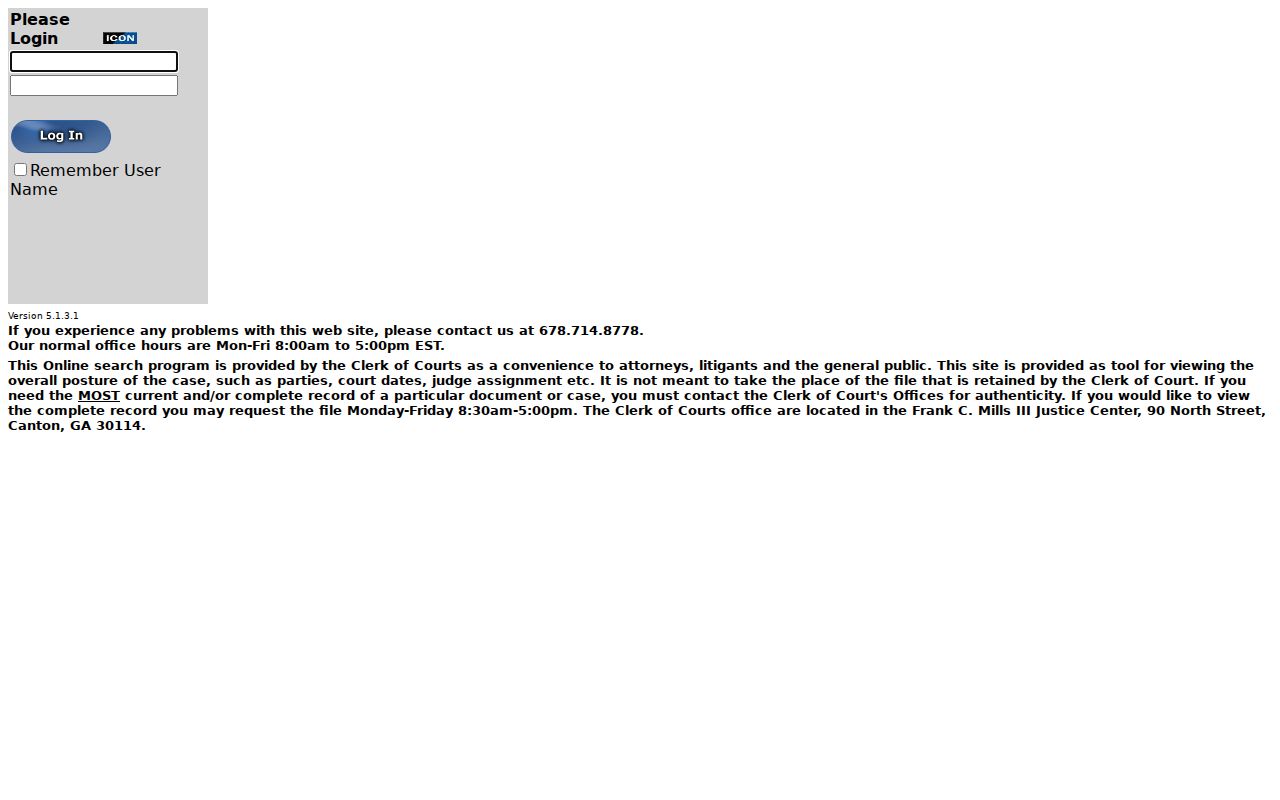
The clerk warns that its retained file, not a screen print, controls when completeness or certification matters.
Cherokee County Records Have Custodians
The office holding a record depends on who made it. Cherokee County NextRequest handles requests to participating county departments and the certified county clerk, but it does not turn that clerk into custodian of sheriff, court, or city-police material. Sheriff-created incident, detention, CAD, and agency video records go through the sheriff. A Canton, Woodstock, or Holly Springs report goes to that city's police records channel. Judicial filings go to the Clerk of Courts.
A focused request names the date, place, agency, person or event, report number if known, document types, and date range. Ask for electronic delivery and a cost estimate above a stated cap. Georgia's response rule generally calls for production within three business days or a description and timetable when records cannot be produced that soon. It is not a promise that a large video request or a file needing many redactions will be finished in three days. The first quarter-hour of administrative search and retrieval time is free, after which reasonable labor and copy charges may apply.
The county NextRequest portal illustrates the request route for participating offices.
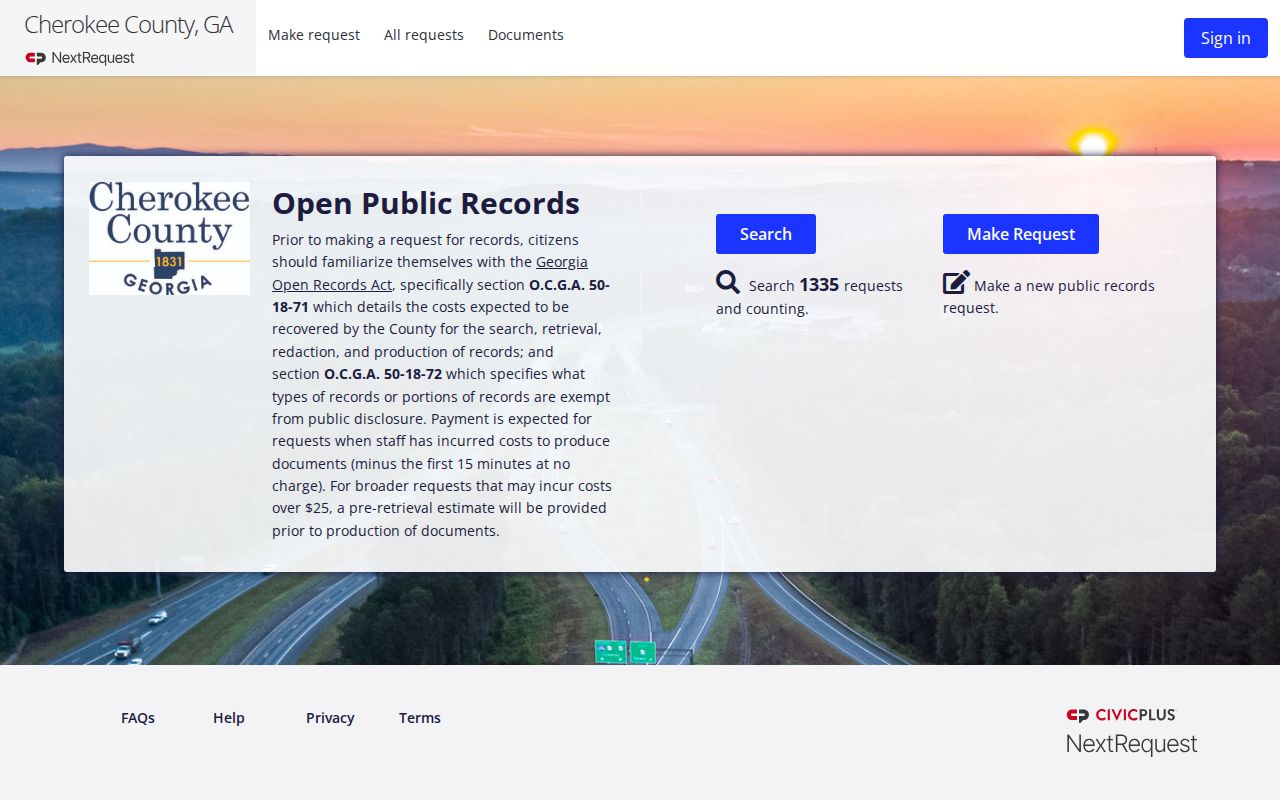
The portal is a delivery channel, not a combined county criminal-history database. If a request seeks both sheriff video and a filed court motion, split it between the sheriff and clerk so each custodian can search its own holdings.
Official Background Checks in Georgia
The Georgia Bureau of Investigation operates the Georgia Crime Information Center, the state's central repository. GCIC receives fingerprint-supported arrests, charges, reported dispositions, wanted-person entries, and correctional data. A person reviewing their own history can contact a sheriff or police department about its local process, or arrange an appointment for a GCIC record inspection. The local agency sets its own identity and submission rules.
The GCIC program hub explains how Georgia criminal-history information is collected and released.
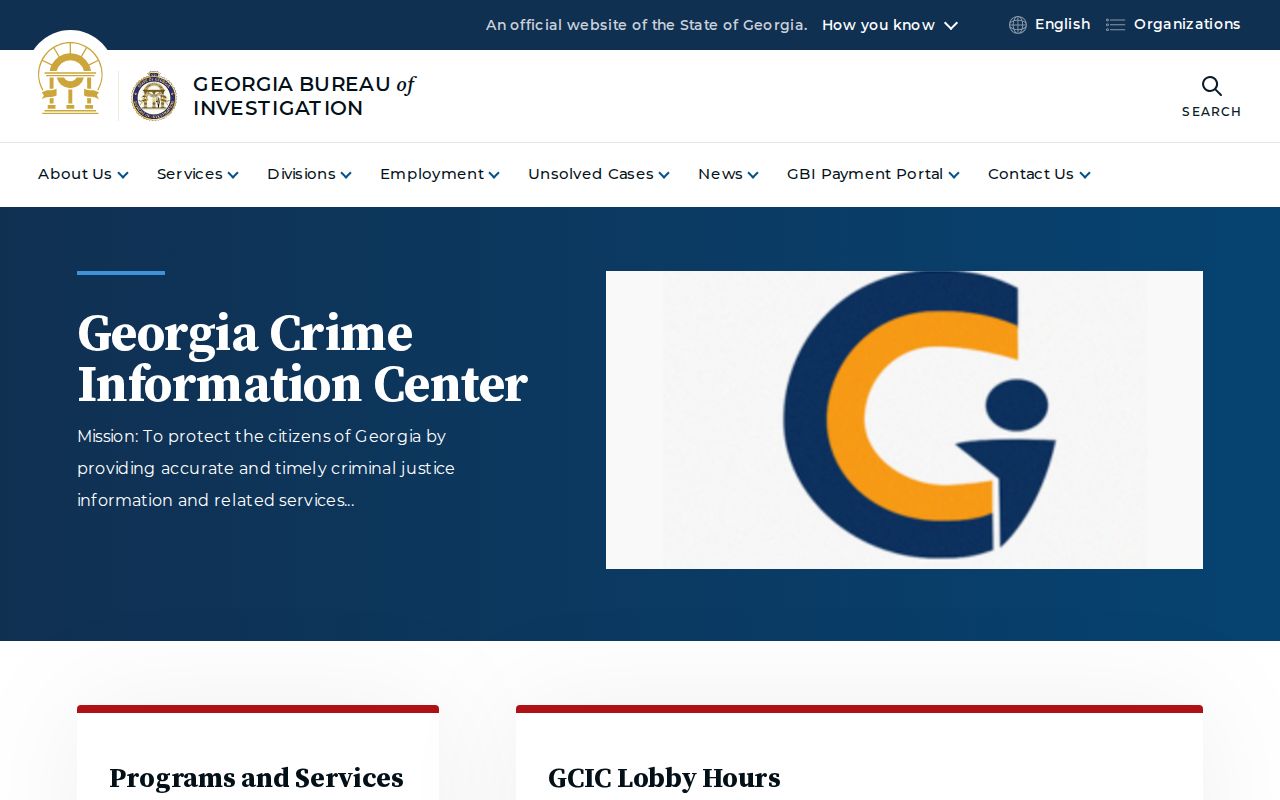
GCIC history is organized around identity and arrest cycles, so it differs from a Cherokee County docket organized around one case number.
Georgia Felon Search is a narrower public product for in-state felony-conviction information under O.C.G.A. § 35-3-34(d.2). It requires full name, race, sex, and date of birth, plus the card transaction shown at checkout. A no-hit is not proof that no county case, arrest, misdemeanor, restricted matter, or delayed disposition exists.
Cherokee County Fingerprint Record Routes
Georgia Applicant Processing Service, or GAPS, is the authorized electronic fingerprint workflow operated through IdentoGO by IDEMIA. It begins with an agency or service code. The person registers, selects a fixed collection site and appointment, pays the applicable fee, and presents valid photo identification. The result usually goes to the authorized requesting agency within 24 to 48 hours. It is not a public portal for downloading another person's full record.
The official GAPS registration page shows the service-code entry and appointment path.
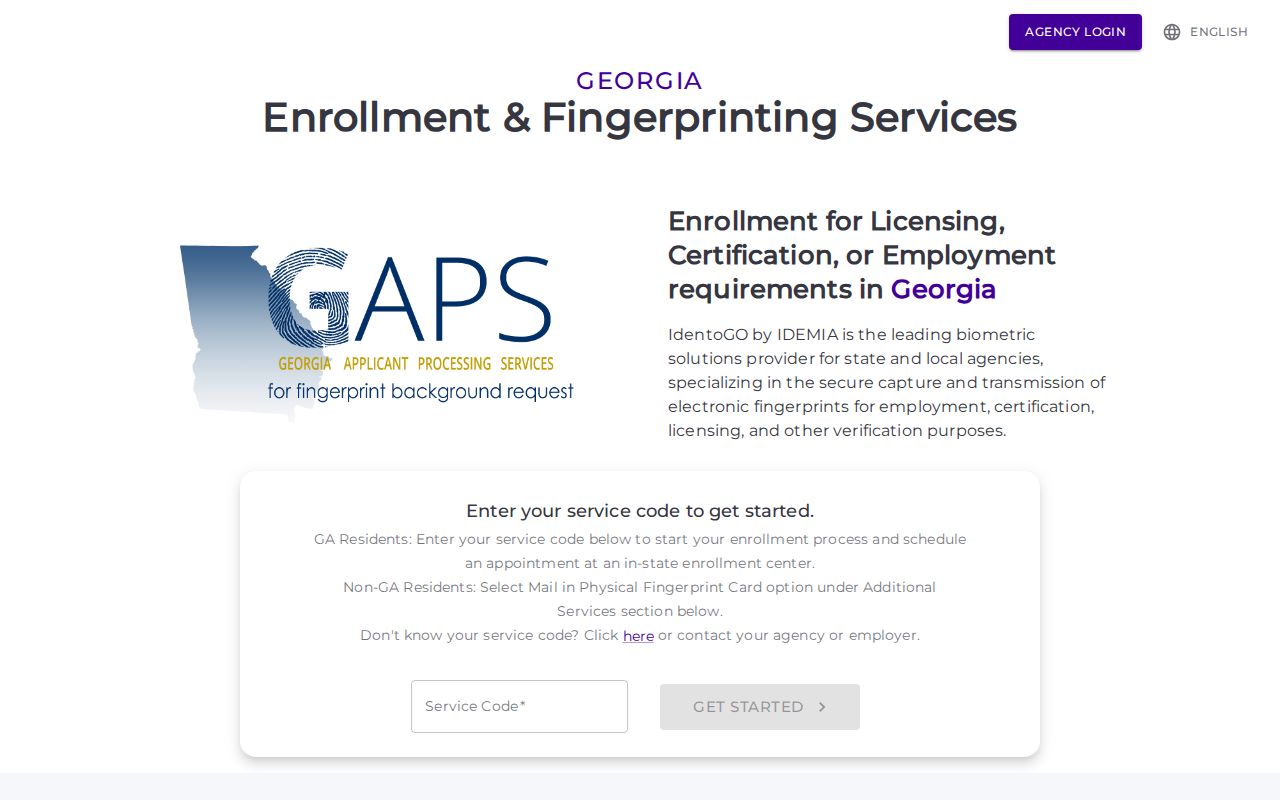
For self-review, confirm whether the chosen route returns a copy to you or sends results only to an authorized agency.
| Product | State fee | GAPS total |
|---|---|---|
| Georgia-only authorized check | $30 | $39.99 |
| Georgia and FBI authorized check | $42 | $51.99 |
| Qualifying volunteer, Georgia only | $28 | $37.99 |
| Record inspection with supplied cards | $10 | Not applicable |
| GCIC fingerprint service | $15 | Not applicable |
Kinds of Cherokee County Criminal Records
Related records document different stages. An incident report describes an investigation and may exist without an arrest. An arrest report states the officer's basis for custody. The jail creates booking identifiers, custody and bond data. Magistrate Court may create warrant, first-appearance, and bail records. Prosecutors decide what charges to file, and the trial-court clerk maintains the case docket and filed papers. GCIC connects reported Georgia arrest cycles with dispositions.
- Reports: held by the sheriff or city police office that created them.
- Bookings: created by the Cherokee County Adult Detention Center.
- Court cases: held by Superior, State, Magistrate, or a municipal court clerk.
- Warrants: issued through courts and served or maintained by the proper agency.
- Repository records: maintained by GCIC from agency submissions.
For statewide court links, Georgia Courts E-Access routes readers to participating providers.
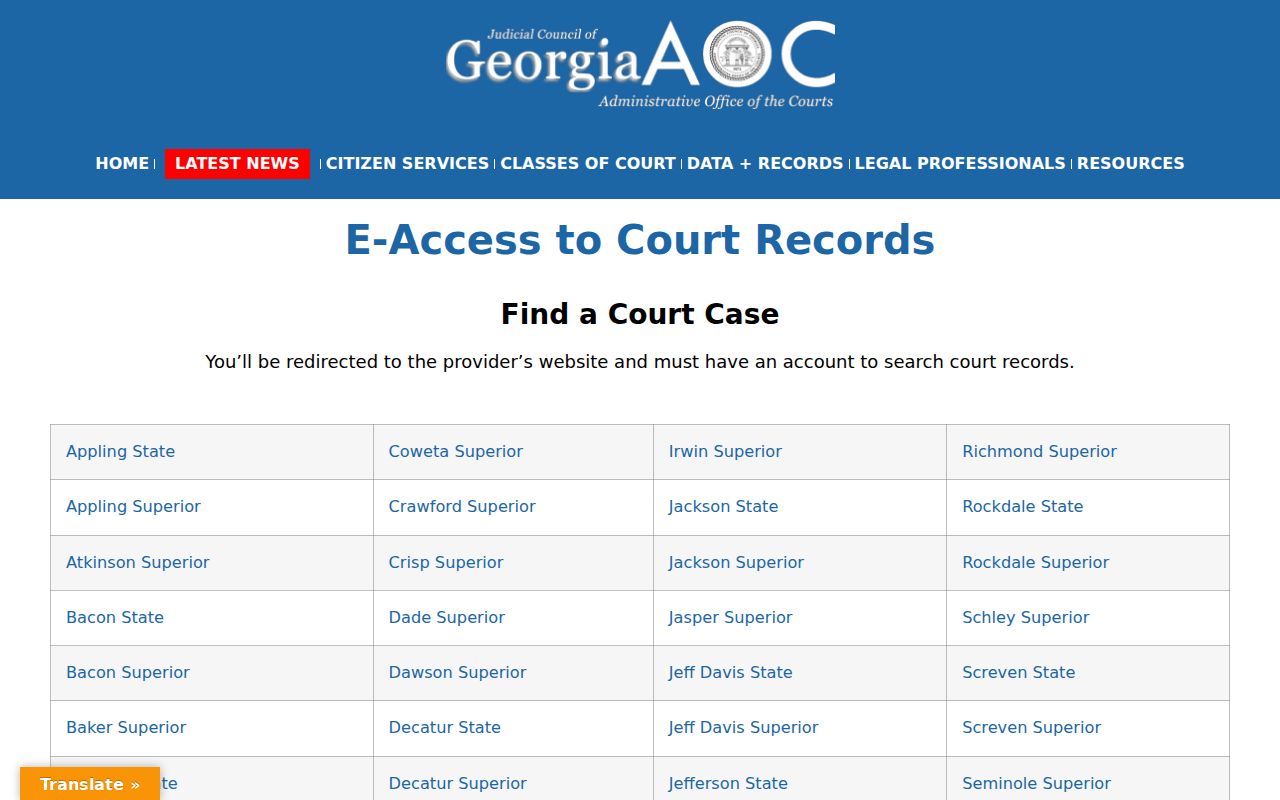
Georgia has no one complete free statewide trial-court index, so Cherokee County's clerk remains essential.
Cherokee County Jail and State Prison
The Cherokee County Adult Detention Center at 498 Chattin Drive creates local booking and custody data. Its public search accepts a full or partial inmate name. Results may show inmate and booking IDs, booking date, arresting-agency abbreviation, charge description, amount, bond type, and total charges. It does not show every fact a reader may expect, such as a public mugshot, date of birth, release date, magistrate, or court. Call jail information at 678-493-4222 when current custody needs confirmation.
A person serving a state sentence may instead appear in GDC Find an Offender.
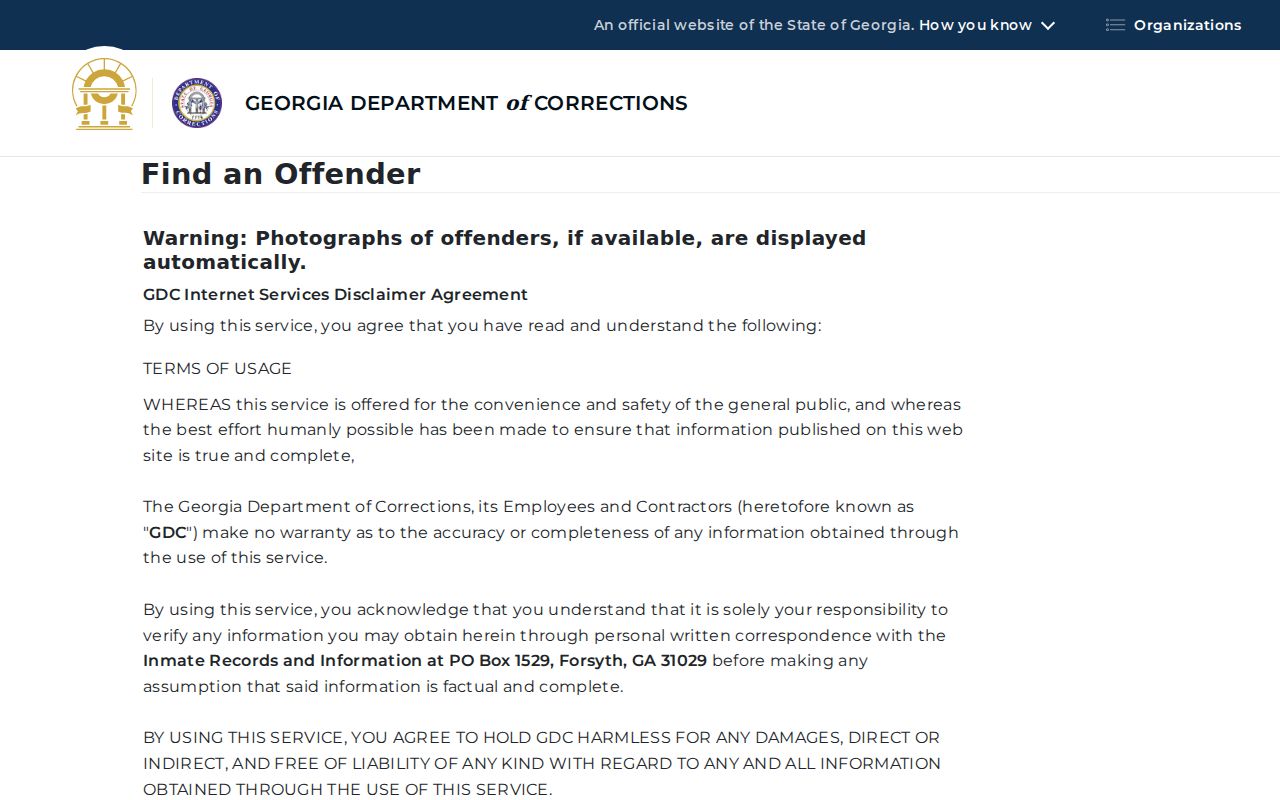
GDC searches can use name, gender, race, age range, institution, GDC ID, or case number. Local jail custody and state correctional custody are separate layers.
Cherokee County Criminal Records: What They Contain
A Georgia repository history can include identity data, arresting agency, arrest date, charges, final judicial disposition, and state correctional custody. It is grouped by arrest cycle. The court record adds case number, charging paper, filing and hearing dates, judge, motions, pleas, judgment, sentence, costs, and probation terms. The booking entry focuses on intake and may use a charge label later changed by the prosecutor.
| Name and identifiers | Reported names, date of birth, SID, FBI-linked or tracking numbers, and physical descriptors where released. |
|---|---|
| Arrest and booking | Agency, arrest date, intake identifiers, initial charges, custody, bond, and release fields. |
| Filed charges | Accusation or indictment language, statute, count, and case classification. |
| Disposition | Dismissal, nolle prosequi, plea, verdict, dead docket, or other final court action. |
| Sentence | Confinement, probation, fines, restitution, and conditions entered by the court. |
| Custody or supervision | Reported GDC custody and relevant probation or parole status. |
“Open” does not mean convicted. “Disposed” only means the case reached a procedural endpoint; read the actual disposition document to learn the result.
Correcting Cherokee County Disposition Gaps
A blank disposition in GCIC does not prove a case remains pending. Compare the arrest cycle with the Cherokee County clerk's final order. When the court outcome is missing or wrong, obtain the correct document from the clerk and ask the source court or prosecutor to transmit the update. Law enforcement corrects arrest or identity data, while courts and other justice agencies correct the outcomes they supplied. GCIC cannot independently rewrite a source record.
- Nolle prosequi
- A prosecutor's formal choice not to proceed with a charge; it is not a not-guilty verdict.
- Dead docket
- A prosecution postponed indefinitely, not an acquittal on the merits.
- Disposition
- The recorded result of a count or case, such as dismissal, plea, verdict, or sentence.
- Arrest cycle
- The repository grouping that links one fingerprint-supported arrest to later charge and outcome reports.
Georgia Public Access Laws
The Georgia Open Records Act gives access to agency records unless an exemption or another confidentiality law applies. Agencies generally produce records within three business days or describe what exists and provide a timetable when production cannot occur in that period. Reasonable copy, search, retrieval, and redaction charges may apply. Court records use clerk and judicial-access rules, while GCIC releases follow separate criminal-history dissemination laws.
Key authorities:
O.C.G.A. §§ 50-18-70 through 50-18-77 establish open-records access, response duties, costs, and exemptions.
O.C.G.A. § 35-3-34(d.2) authorizes the public felony-conviction product with required identifiers.
O.C.G.A. § 35-3-35 governs authorized dissemination and fingerprint or consent requirements.
O.C.G.A. § 35-3-37 governs record restriction and related court-sealing routes.
Active investigations, juvenile matters, sealed records, protected victim data, medical details, security information, and confidential sources may be withheld or redacted. Ask for all segregable public portions and the legal basis for each withholding.
Cherokee County Warrants Need Care
No verified public online Cherokee County warrant list was found. The Sheriff's Warrant and Civil Unit maintains and serves local warrants, other-county warrants, holds, and felony extraditions. Call 770-345-3309. Magistrate Court issues arrest and search warrants, while county and city courts may issue bench warrants after a failure to appear. An unserved, sealed, or juvenile warrant may not be disclosed.
Use the warrant unit, the issuing court's docket or phone line, and the relevant municipal court for city citations. If a possible warrant concerns you, get court or counsel instructions before appearing. The sheriff does not collect warrant, fine, bond, ankle-monitor, or release money through an unsolicited call.
Cherokee County Diversion and Accountability
The Blue Ridge Judicial Circuit District Attorney's Pretrial Diversion Program began in 2017. Current policy calls for an application within 90 days of arrest and acceptance within 45 days after approval. Entry is discretionary and generally addresses qualifying nonviolent conduct. Participants may face restitution, fees, service, screening, counseling, and other terms. Successful completion leads to dismissal and record restriction, but the process is not automatic.
Cherokee County also operates Felony Drug Accountability, DUI, Treatment Accountability, and Veterans Courts. Drug Court began in 2013 and uses five phases over at least 18 months. Treatment Court began in 2016, and Veterans Court followed in 2017. These programs can add review hearings, compliance entries, sanctions, and graduation or termination orders to the court file. They affect how a case moves, yet the docket and final filed order still show the legal result.
Diversion, accountability court, and First Offender treatment are not interchangeable. Each has its own entry rules and final paperwork. A reader checking their own Cherokee County criminal record should obtain the last order, verify that the clerk entered the expected disposition, and then check whether GCIC received the result. Completion of program conditions does not by itself prove that every public-facing source has been updated.
Restricted, Sealed & Expunged Records
Georgia calls its main remedy record restriction, not deletion. It limits ordinary dissemination of an eligible GCIC charge cycle. The underlying arresting-agency report or court file does not vanish by default, and a separate judicial sealing order may be needed for court records. Many nonconviction outcomes can qualify, while a conviction usually requires a distinct route such as successful First Offender treatment, a pardon-based petition, or another statutory provision.
The date of arrest changes the starting route. For an arrest on or after July 1, 2013, contact the prosecutor responsible for the case. For an earlier arrest, use the paper application through the actual arresting agency, which forwards it to the prosecutor. First inspect the Georgia history and correct any missing disposition. Examples that may qualify under the governing conditions include dismissal, no presentation to a grand jury, nolle prosequi, dead docket, or no record on file. The outcome label is a starting point, not a promise of approval.
Cherokee County city arrests remain tied to the city agency that made them. Restriction is charge-specific, and successful action should be checked both in GCIC and in the county court file. First Offender discharge and a pardon are separate remedies. A pardon does not erase a conviction, though a qualifying pardon may support a court petition under the statutory limits. Juvenile, sealed, and restricted information also follows special disclosure rules rather than the ordinary public channels.
Cherokee County Crime Data Context
Population growth and operational totals can provide context, but neither proves anything about a named person. The Census QuickFacts profile supplies demographic context for fast-growing Cherokee County.
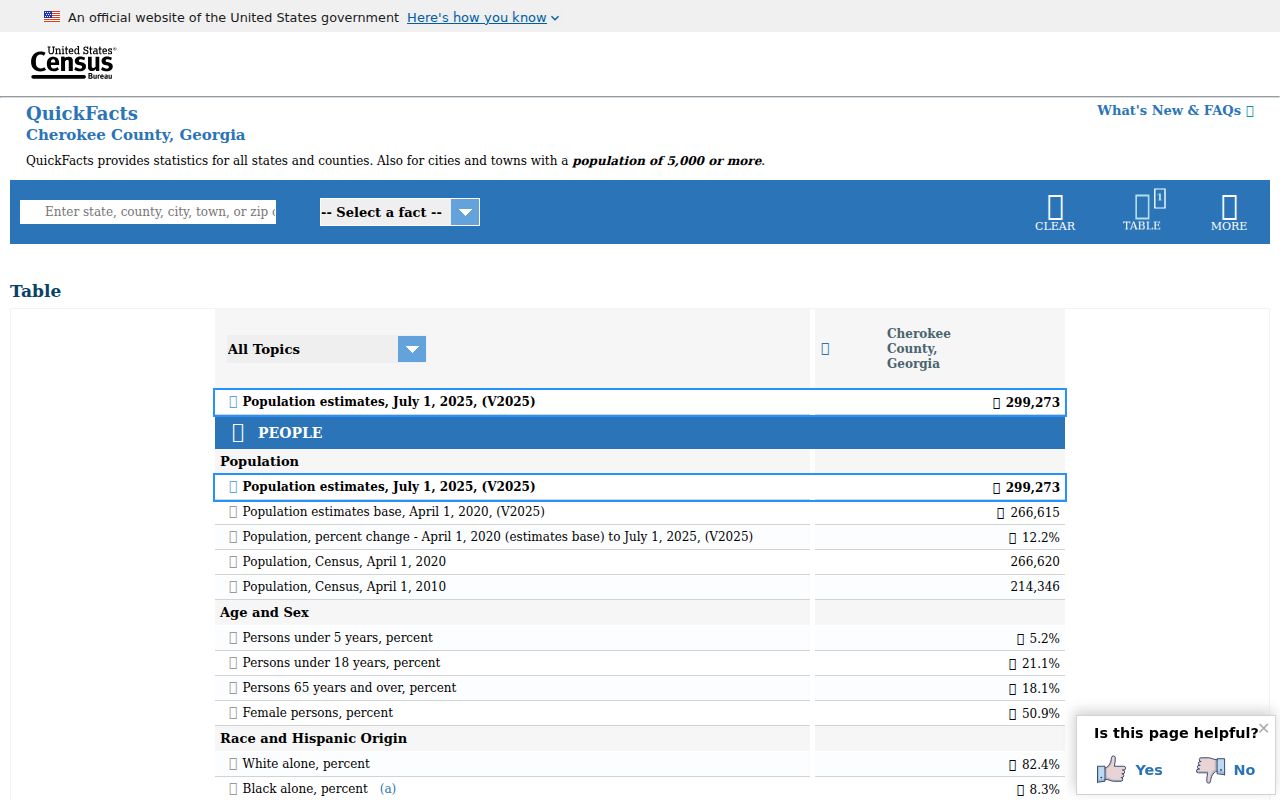
Use population figures as a denominator only when the crime source and reporting year match.
The GBI crime-statistics program is the official Georgia UCR source.
Sheriff enforcement counts, bookings, reported offenses, charges, and convictions measure different events and should not be blended into one crime rate.
City-by-City Criminal Records in Cherokee County
Canton, Woodstock, and Holly Springs each keep police-created reports and municipal court material through their own offices. County custody, felony and misdemeanor prosecutions, and GCIC reporting add later layers. Begin with the city when its officers created the event, then follow any filed case to the Cherokee County clerk.
Canton Record Check
Canton Police keeps city reports, while Canton Municipal Court holds its own ordinance and assigned case files.
Woodstock Record Check
Woodstock Police uses its city records route; county booking and trial files remain separate.
Holly Springs Record Check
Holly Springs routes police and municipal court requests through the proper city office.